
Everything You Need to Know About Pickleball and Why It's On Cruise Ships Now

A lot of people are thinking that pickleball is just a fad and will die out soon. However, the numbers don’t lie, and more and more people are picking up a paddle and hitting the pickleball court. What’s even more interesting is that this sport is now making its way to cruise lines, with most creating or renovating spaces in their ship for guests to play.
For this blog post, we’ll take a look at how this fun and interesting sport started and why people are highly interested in it. We’ll also figure out which cruise lines have pickleball courts, and give you exciting pickleball tips so you can play your first game without a hitch.
How Did Pickleball Start?
Pickleball has a delightfully quirky origin story that feels more like a summer vacation mishap than the birth of one of the fastest-growing sports in the world.
The Accidental Beginning (1965)
Pickleball started in the summer of 1965 on Bainbridge Island, Washington, when three friends, Joel Pritchard, Bill Bell, and Barney McCallum, returned home from a golf outing to find their families bored and restless. With no official game planned and limited equipment on hand, they improvised. They lowered a badminton net, grabbed ping-pong paddles, and used a plastic perforated ball. The goal was simple: create a game that everyone, including kids, could play immediately.
What began as a casual backyard experiment revealed something special. The rules were adjusted on the fly to make rallies longer and movement easier, focusing on strategy rather than raw athletic power. That balance made the game surprisingly addictive.
Early Rule Development
As the families kept playing, the three founders refined the game. The net height was standardized, the court size was adapted from badminton, and the now-famous non-volley zone, often called “the kitchen,” was introduced to prevent players from dominating the net with constant smashing. These changes helped level the playing field and encouraged smarter, more tactical play.
Wooden paddles replaced ping-pong paddles, and the lightweight plastic ball remained because it was slow enough to control but lively enough to keep things exciting. By the late 1960s, pickleball had clear rules and a distinct identity.
Where the Name Came From
The “pickleball” name has sparked debate for decades. The most widely accepted explanation is that Joel Pritchard’s wife, Joan, named the game after a “pickle boat” in rowing, which is made up of leftover crew members from other boats. Since the game was a mix of elements from badminton, tennis, and table tennis, the name felt fitting.
There’s also a popular hearsay involving the family dog named Pickles, but the dog reportedly came later and was actually named after the game. So yes, the sport came first. The dog just stole the spotlight.
Growth Beyond the Backyard
By the early 1970s, pickleball was spreading beyond Bainbridge Island into schools, community centers, and recreation programs across the United States. The first official rulebook was published in 1976, and the USA Pickleball Association was later formed to organize tournaments and standardize play nationwide.
What truly fueled its rise was the game’s accessibility. Pickleball required minimal equipment, could be played indoors or outdoors, and appealed to all ages. Fast forward to today, it’s played worldwide and can be found in all retirement communities and professional courts with televised tournaments.
A Happy Accident That Stuck
Pickleball wasn’t designed to become a global phenomenon. It was created to solve boredom on a lazy afternoon. Yet that simplicity, combined with smart rule design and universal appeal, is exactly why it endured. From a backyard experiment in 1965 to packed courts around the world, pickleball’s story proves that sometimes the best ideas really do come from winging it.
And not bad for a game that started because three dads forgot to bring enough golf clubs.

Why Playing Pickleball Is Beneficial for All Ages
1. Improves Cardiovascular Health
Pickleball keeps your heart busy without overwhelming your entire body. The constant movement, quick rallies, and short bursts of speed raise your heart rate just enough to improve circulation and endurance. Because games are fast-paced but low-impact, players tend to stay on the court longer, which means more heart-healthy minutes without realizing they’re exercising.
2. Boosts Balance and Coordination
Those quick side steps, pivots, and paddle swings do wonders for your balance. Pickleball forces you to react fast, track the ball, and adjust your body positioning on the fly. Over time, this sharpens coordination and stability, which is especially helpful for injury prevention and everyday movements, like not tripping over your own feet.
3. Easy on the Joints
Unlike high-impact sports that punish your knees and ankles, pickleball is refreshingly gentle. The smaller court means less running, and the slower ball reduces strain on joints. This makes it a favorite for people who want to stay active without waking up the next day feeling like their joints filed a complaint.
4. Builds Strength and Muscle Tone
Don’t let the light paddle fool you because pickleball can really work your muscles. Your arms and shoulders engage with every swing, your core stays active for balance and rotation, and your legs get a steady workout from constant movement. It’s not about bulking up; it’s about building functional strength that actually helps you move better.
5. Enhances Mental Focus and Reflexes
Pickleball is a mental game disguised as a casual sport. You’re constantly anticipating shots, adjusting strategies, and reacting quickly to your opponent’s moves. This keeps your brain engaged and sharp, improving focus, reaction time, and decision-making skills. Think of it as a puzzle you solve while breaking a sweat.
6. Reduces Stress and Boosts Mood
Few things beat the stress-relieving combo of movement, laughter, and friendly competition. Pickleball releases endorphins, helps clear your mind, and gives you something positive to focus on. Whether you’re winning or losing, you usually leave the court in a better mood than when you arrived, and that’s a win all by itself.
7. Encourages Social Connection
Pickleball is famously social. The game naturally brings people together, whether you’re playing doubles, waiting your turn, or chatting courtside. It’s easy to meet new people, build friendships, and feel part of a community. For many players, the social side is just as addictive as the game itself.
8. Accessible for All Ages and Skill Levels
One of pickleball’s biggest superpowers is inclusivity. Kids, adults, seniors, beginners, and athletes can all play on the same court. The rules are easy to learn, and the learning curve is forgiving, which means less frustration and more fun right from the start. It’s rare to find a sport that truly welcomes everyone.
9. Improves Agility and Reaction Speed
That little plastic ball moves faster than you expect. Pickleball sharpens your agility by training your body to respond quickly and efficiently. Over time, you’ll notice faster reflexes, smoother movement, and better footwork; not just on the court, but in daily life too.
10. Keeps You Consistently Active
The best exercise is the one you’ll actually do, and pickleball nails this. Because it’s fun, social, and not overly exhausting, players tend to come back again and again. That consistency leads to long-term health benefits, making pickleball less of a workout chore and more of a habit you genuinely look forward to.

Various Cruise Lines With Pickleball Courts
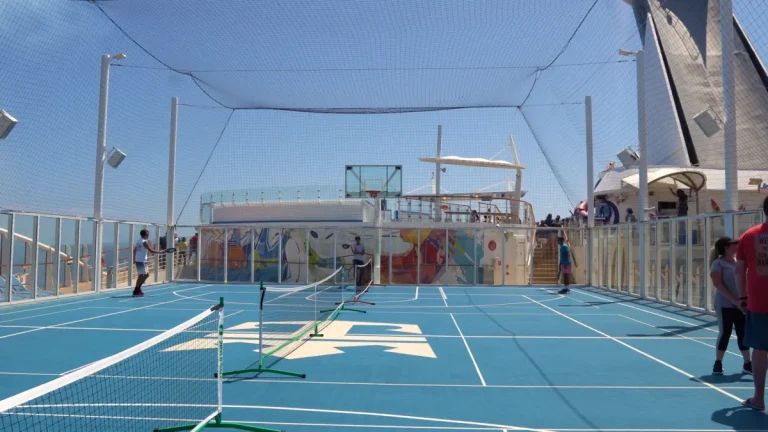
What started as a backyard pastime has now bounced its way onto cruise ship decks around the world, giving passengers another fun reason to stay active between ports, pool time, and dessert number two. Whether you’re a seasoned player or just curious about the hype, these cruise lines have embraced the sport in their own unique way, making it easier than ever to squeeze in a friendly match while you sail:
- Holland America Line: Holland America is the undisputed pickleball MVP of the cruise world. Every ship in its fleet now has dedicated pickleball courts on the top deck, and the line has officially partnered with the Professional Pickleball Association (PPA). Even better, they offer complimentary beginner lessons, making it incredibly welcoming for first-timers and seasoned players alike.
- Regent Seven Seas Cruises: Regent brings pickleball into the luxury lane. Seven Seas Explorer already features a pickleball court, with Seven Seas Splendor following suit. While Regent is known more for fine dining and all-inclusive elegance, adding pickleball shows the line understands that even luxury travelers like a little friendly competition between spa visits.
- Princess Cruises: Princess Cruises offers pickleball on select ships, including Sky Princess and Enchanted Princess, where games take place on the Sports Court. What’s especially fun is that Princess often schedules open play sessions in the daily program. And if enough players show interest, cruise directors may even organize onboard tournaments.
- Carnival Cruise Line: Carnival is steadily expanding pickleball across its fleet. Carnival Conquest currently has a dedicated pickleball court added during its 2022 drydock, with Carnival Glory joining it. On many other Carnival ships, pickleball is played on basketball courts using newly added equipment. It’s very on-brand Carnival, flexible, energetic, and focused on making sure guests can play without overcomplicating things.
- Royal Caribbean International: Royal Caribbean takes a hybrid approach to pickleball. Odyssey of the Seas offers a dedicated indoor pickleball space inside the SeaPlex, which is great for weather-proof play. Many other ships feature pickleball sessions as part of their sports programming, often sharing space with other activities. With more ships adding it regularly, Royal Caribbean is clearly leaning into the sport’s growing popularity.
- Celebrity Cruises: Celebrity Cruises has embraced pickleball across multiple ship classes. Edge-class ships like Celebrity Beyond and Celebrity Apex feature courts at the stylish Rooftop Garden, while Solstice- and Millennium-class ships offer pickleball on their sports decks. It’s a nice blend of fitness and flair, perfect for travelers who want a little competition without sacrificing atmosphere.
- MSC Cruises: MSC is newer to the pickleball scene but moving quickly. MSC World Europa already features pickleball, and MSC Euribia was designed to include a court as well. This signals that MSC sees pickleball as a long-term onboard activity, not just a passing trend.
- Crystal Cruises: Crystal Cruises is adding pickleball to its activity lineup as its revamped ships return to service. Known for upscale experiences and enrichment programs, Crystal’s inclusion of pickleball shows the sport’s appeal even among luxury-focused travelers who like to stay active between lectures and fine dining.
- AmaWaterways: AmaWaterways made history by becoming the first river cruise line to add a pickleball court. The court is located on AmaMagna, its innovative double-width ship. It’s a big deal in the river cruise world, proving that pickleball isn’t just for mega-ships. It can thrive even on intimate, destination-focused sailings.
Friendly Tips for Players New to Pickleball
If it’s your first time playing pickleball, take a breath and relax. Everyone on the court was a beginner once, and that’s part of what makes the game so welcoming. These friendly tips are designed to help you ease into pickleball with confidence, avoid common beginner hiccups, and enjoy the game from your very first serve.
- Start With the Basics and Don’t Rush It: Pickleball has simple rules, but that doesn’t mean you need to master everything on day one. Focus on understanding the serve, the scoring, and where you’re allowed to stand. Once those basics click, everything else feels much easier. Progress comes fast in pickleball, so give yourself permission to be a beginner.
- Use a Comfortable Paddle: You don’t need the fanciest paddle on the court. What matters most is that it feels good in your hand and isn’t too heavy. A comfortable paddle helps you control your shots better and keeps your arm from getting tired too quickly. Think of it as choosing a good pair of walking shoes, not dress shoes.
- Stay Out of the Kitchen Until You Shouldn’t: The non-volley zone, better known as the kitchen, can be confusing at first. A simple rule to remember is this. Do not hit the ball out of the air while standing in it. Give yourself time to learn when you can step in and when you need to hang back. Everyone trips up on this at first, so don’t stress over it.
- Focus on Placement, Not Power: Pickleball rewards smart shots more than strong ones. Placing the ball where your opponent isn’t is far more effective than swinging as hard as you can. Aim for consistency and control, and you’ll win more points while using less energy. Your shoulders will thank you later.
- Communicate With Your Partner: If you’re playing doubles, communication is key. Calling “mine” or “yours” avoids awkward paddle collisions and keeps your team relaxed. Even simple encouragement goes a long way. Pickleball is as much about teamwork and good vibes as it is about scoring points.
- Watch Other Players and Learn: One of the best ways to improve is by observing more experienced players. Watch how they position themselves, when they move to the net, and how they return serves. You’ll pick up useful tips just by paying attention, no formal lesson required.
- Learn to Dink Early: Dinking might look gentle, but it’s one of the most important skills in pickleball. These soft shots near the net slow the game down and give you control over rallies. New players often want to hit hard, but learning when to dink will instantly make you more confident and effective on the court.
- Have Fun and Don’t Take It Too Seriously: Mistakes will happen, and that’s part of the game. Laugh them off, keep playing, and enjoy the process. Pickleball has such a welcoming community because players remember that it’s supposed to be fun first. Skill will come. Smiles usually come faster.
Book Your Next Cruise Vacation Through Travel With Brigitte
Cruising out on sea while playing pickleball is within reach when you book through Travel With Brigitte. If you’re not sure which cruise line to choose, our travel agents can help you pick those that fit your budget and needs. We can even scour multiple cruise lines and search for deals and promos to make your vacation even more enjoyable.
Reach out to us via email at bookings@travelwithbrigitte.com to talk to one of our cruise experts.