
Unique Cruise Ship Technology You May Not Have Heard Of

Key Takeaways:
- Modern cruise ships use apps, wearable devices, and smart technology to streamline boarding, payments, and onboard navigation.
- Advanced internet and satellite systems help passengers stay connected even while sailing far from shore.
- Innovations such as smart cabins, digital services, and personalized experiences continue to improve guest convenience.
- New technology also enhances safety, operational efficiency, and environmental sustainability across the cruise industry.
Cruise lines are constantly finding ways to up their game in terms of offering the highest level of satisfaction for their passengers. Aside from keeping their ships clean and looking new, they also implement the latest technology that enhances the cruise experience for guests. From touchless systems to interactive maps, these innovative technologies will make anyone enjoy the open seas a lot better.
Below, we’ll discuss the technologies currently used on several famous cruise ships. We’ll also look at the most technologically advanced cruise ships and what the future of cruising will look like, especially with the steady improvement in technology.
Radio Frequency Technology (RFID)

RFID (Radio Frequency Identification) chips are one of the most important features in modern cruising. Embedded in cruise cards, wristbands, or medallions, these chips let you breeze through almost everything onboard. Tap your wristband against your cabin door, and it unlocks. Want a drink? The bartender can see your account instantly and charge it with a tap. Need to find your friends or family? Some ships even use RFID wearables to share location info through the ship’s app.
Remote Check-In

Cruise check-in used to feel like waiting in line during a busy day at the DMV. Remote check-in changes the game by letting passengers complete most of the process before arriving at the port. Using a cruise line’s website or mobile app, you can upload your travel documents, passport details, emergency contacts, and even a security photo. Some apps allow you to schedule an exact arrival time at the terminal, so you skip the big crowds.
Intelligent Navigation

Modern cruise ships use navigation systems that are now hyper-smart digital copilots. Intelligent navigation integrates GPS satellites, radar, ocean current data, and advanced weather models to map the best possible routes. These systems can automatically reroute ships to avoid storms, optimize fuel consumption, or reduce rolling when seas get rough.
High-Speed Video Streaming

Cruise ships are starting to rival land-based internet speeds thanks to satellite tech upgrades, especially with SpaceX’s Starlink. With this leap in connectivity, streaming services like Netflix, YouTube, or Disney+ are actually usable at sea. Royal Caribbean brands this as “VOOM,” while Carnival and Norwegian have also jumped on board with similar high-speed packages.
Wearable Credit Cards

Forget fumbling for your key card. Wearables are the new cruise essential. Princess Cruises’ OceanMedallion is the most famous example: a quarter-sized device passengers wear as a wristband, necklace, or clip. It acts as your room key, payment method, and even a way for the crew to find you when delivering drinks or food. Royal Caribbean has a similar “WOW Band,” which works like a tap-to-pay credit card.
What Is the Most Technologically Advanced Cruise Ship?
With many types of cruise ships, you might wonder which one has the most technologies implemented. Below, we’ll look at a few ships with modern technological advancements:
What Makes a Ship “Technologically Advanced?”
No ship can be considered “the best among the rest.” So, we’ll use the metrics below to help list down the ships with the most useful technologies:
- Sustainable propulsion/fuel technologies (LNG, hybrid, fuel cell, e-LNG)
- Automation & energy efficiency (smart systems for hull design, drag reduction, waste heat recovery, etc.)
- High connectivity and data / IoT infrastructure
- Advanced guest tech (wearables, biometric or smart entry, interactive entertainment, app-based personalization, etc.)
- Novel physical and entertainment technologies (new ride concepts, immersive spaces, VR/AR, etc.)
Top Contenders
Here are some cruise ships that are very high up in those metrics:
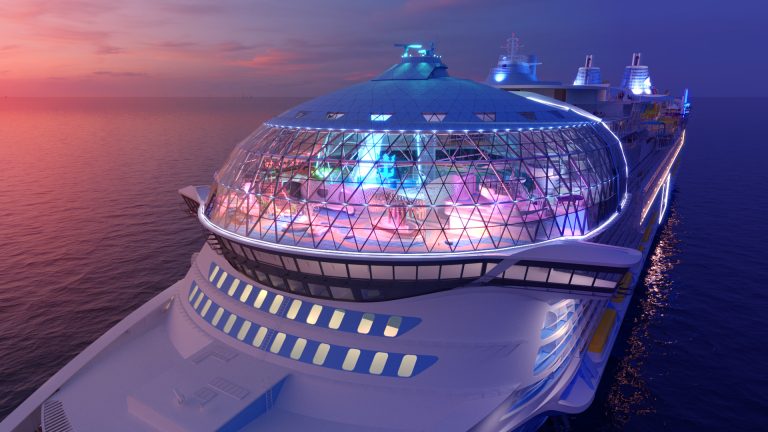
Icon of the Seas (Royal Caribbean)
- Fuel/Propulsion: It’s powered by liquefied natural gas (LNG) via six multi-fuel Wärtsilä engines; the ship can run on both LNG and conventional distillate.
- Scale & Features: One of the largest cruise ships, with major innovations like huge waterparks, advanced entertainment domes (AquaDome), and “The Pearl” – a massive LED interactive art installation that works with motion sensors to respond to movement in the space.
- Eco-concerns & Green Features: While primarily powered by LNG, which is cleaner than some alternatives, it still has environmental trade-offs. However, it incorporates shore power capability and modern efficiency strategies.
MSC Seascape
- Known as the most technologically advanced cruise ship ever built in Italy (at least as of its launch).
- It features strong environmental certifications (“Green Plus” from RINA), advanced wastewater and exhaust treatment systems, and design innovations to bring guests closer to the sea (large outdoor areas, optimized views).
Princess Cruises – MedallionClass ships (e.g., Caribbean Princess, Regal Princess, etc.)
- Their OceanMedallion system is a wearable tech platform that handles keyless stateroom access, personalized services, touchless embarkation and disembarkation, real‐time tracking / interactive maps, etc.
- MedallionNet offers high-speed connectivity; the rides towards full fleet-wide deployment mean many ships are getting upgraded.
Quantum of the Seas (Royal Caribbean)
- When it launched, it was dubbed “the world’s most technologically advanced cruise ship” for its time. Features: virtual balconies for interior cabins, robot bartenders, a skydiving simulator, advanced connectivity, etc.
What the Future of Cruising Will Look Like
As technology rapidly evolves, the entire world also evolves with it. The same thing can be said about the cruise industry. At some point in the future, ships will most likely be powered by cleaner fuels like LNG or hydrogen, guided by AI-driven navigation that ensures smoother and greener sailing, and connected to the world through ultra-fast satellite internet.
Passengers will enjoy seamless, contactless experiences, from biometric check-ins to wearable devices that instantly unlock cabins, handle payments, and personalize services. Entertainment will blend virtual and real worlds with augmented reality excursions, holographic shows, and immersive spaces, while health tech and smart sanitation will keep safety a top priority.
Let Travel With Brigitte Find Your Next Cruise Vacation
Once you’ve found your preferred cruise line, the next step is finding a team to help make the booking process easier. With a team of experienced specialists, we do our best to satisfy the needs of every client we serve. Whether it’s looking for cruise deals or simply a room with your preferred view, you’ll have our full support every step of the way.
Reach out to us right away and our cruise specialists will be on top of it providing answers to your questions and concerns.